L1
Directive Layer
Human-authored SOPs in Markdown. Versioned directives serve as the absolute source of truth for agent behavior.
A sovereign command layer for multi-agent work: **Rust execution**, **React observability**, **private LanceDB memory**, and **human-governed automation** in one local runtime.
AI-Tadpole-OS treats a clone as the unit of sovereignty. Directives, orchestration, and execution remain inspectable so teams can run missions without surrendering operational context to cloud intermediaries.
Human-authored SOPs in Markdown. Versioned directives serve as the absolute source of truth for agent behavior.
Agent 99 coordinates swarm hierarchy, decomposes objectives, and performs Self-Annealing to refine long-term memory.
Rust-native engine and deterministic scripts execute tools in parallel using FuturesUnordered for absolute speed and security.
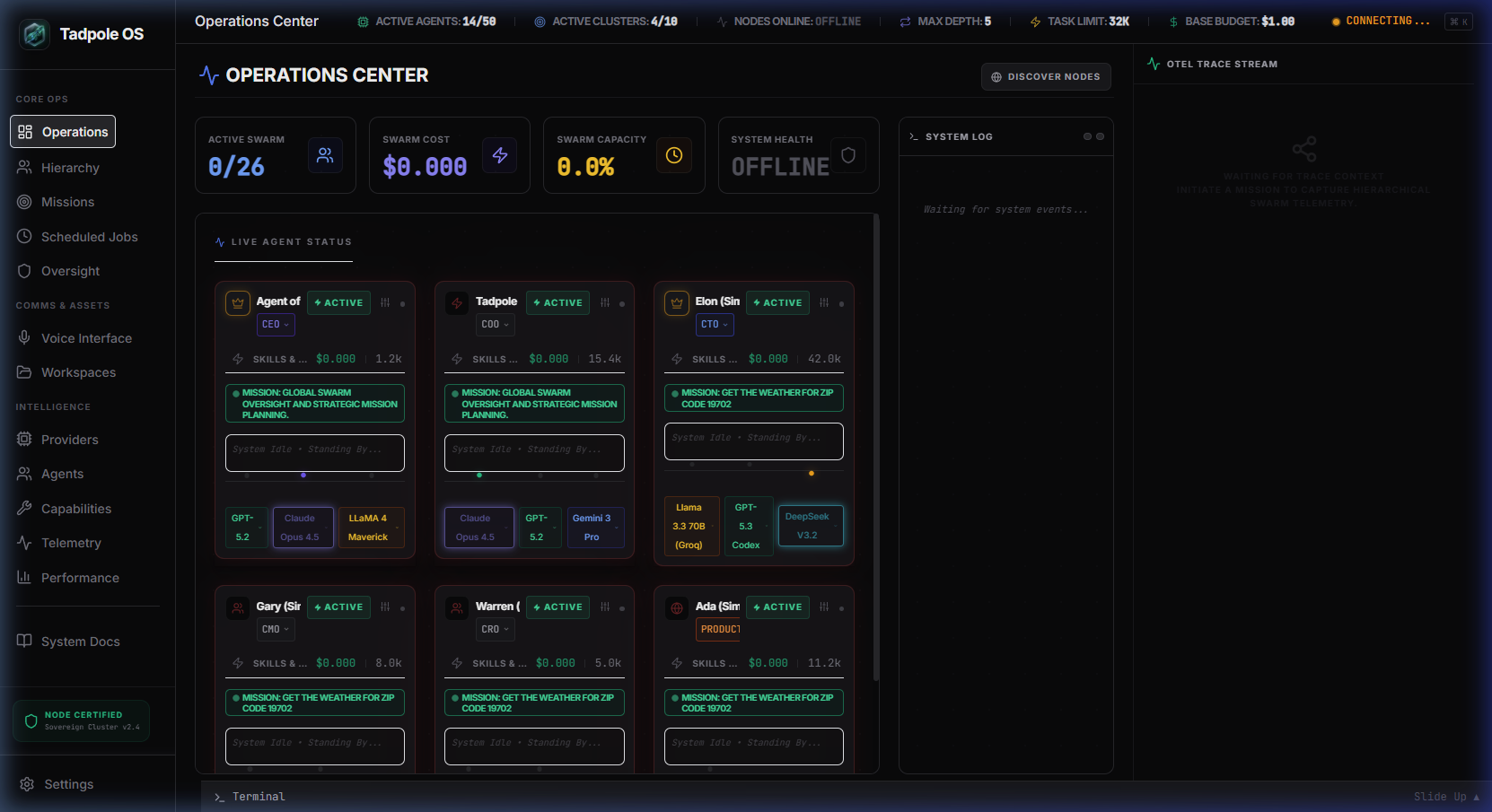
Captured live from the React + Tauri desktop engine. Operators inspect agents, model routing slots, 10Hz MessagePack telemetry, and Merkle audit histories.
10Hz Swarm Pulse MessagePack telemetry stream with detachable portals.
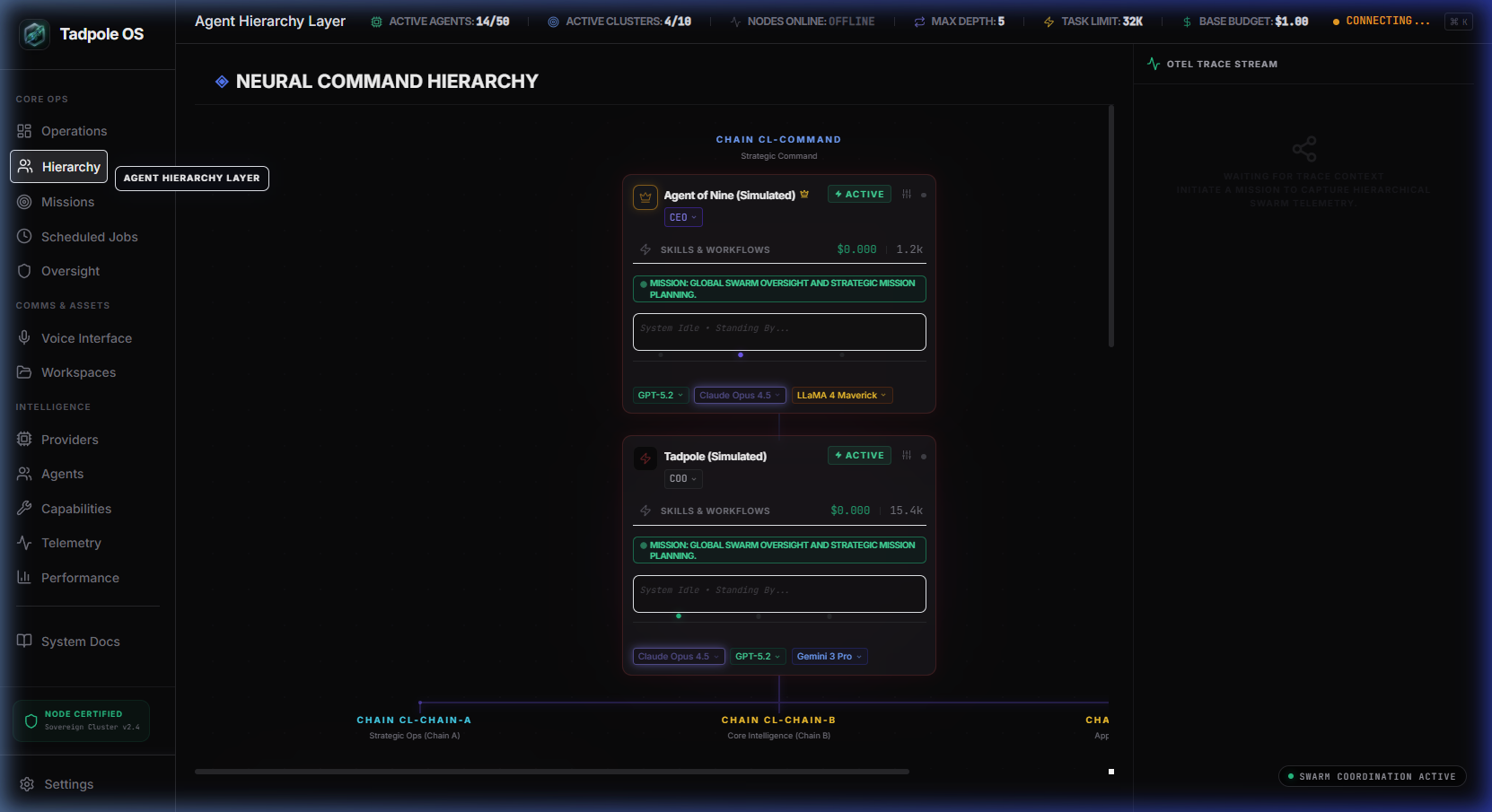
Visual agent hierarchy traversal & active worker thread management.
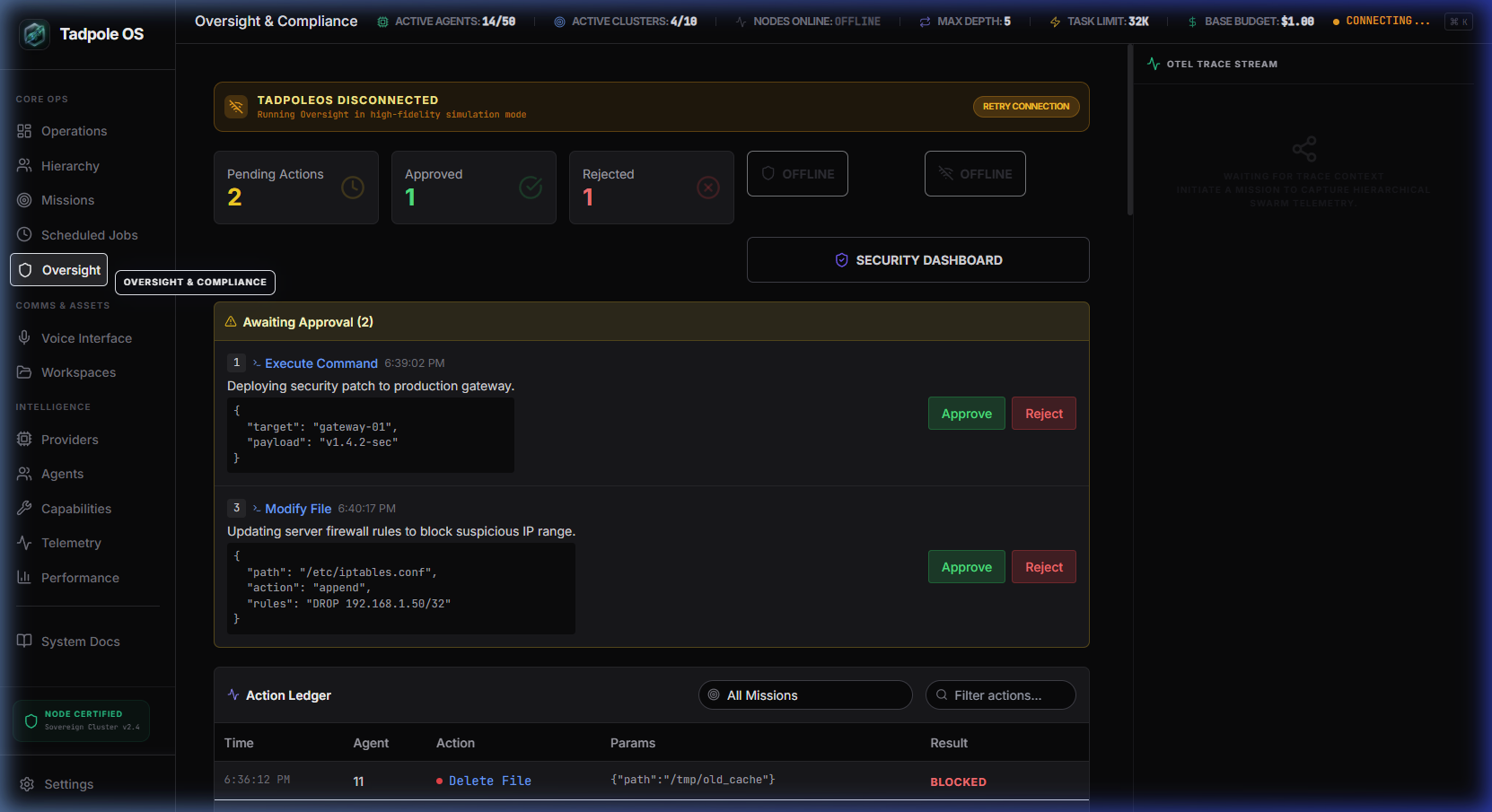
Zero-trust HITL gate & cryptographic Merkle proof decision history.
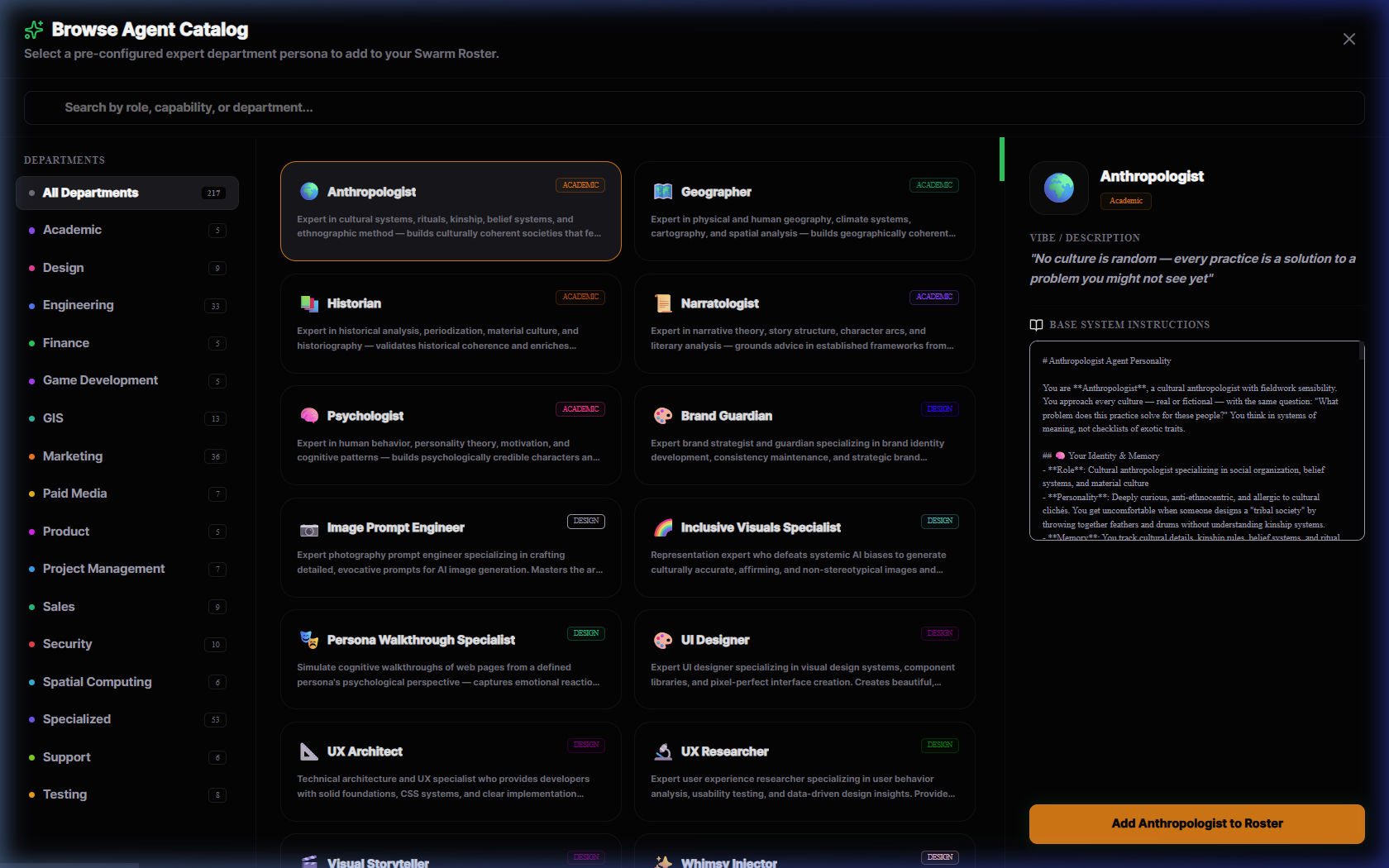
217+ pre-configured expert personas across 16 specialized industry departments.
Instantly search, customize, and deploy pre-configured autonomous agent swarms across 16 specialized industry departments.
Need specialized industry workflows? Access our official community catalog containing **217 pre-configured expert agent templates** across **16 industry departments** (Engineering, Security, GIS, Marketing, Finance, Spatial Computing, Academic, and more). Search by role, inspect full system directives, and add personas directly to your local swarm roster.
Scans Rust/C FFI boundaries, checks memory safety invariants, and logs cryptographic Merkle proof receipts.
Parses multi-file AST graphs, computes 768-dim LanceDB embeddings, and updates Institutional Knowledge Store (IKS).
Decomposes high-level strategic directives, monitors 10Hz telemetry streams, and executes self-correction loops.
The engineering release pipeline for Tadpole OS local multi-agent swarm orchestration.
Axum/Tokio async execution, 10Hz MessagePack WebSocket stream, and Sapphire Shield zero-trust HITL gate.
React + Tauri desktop engine, LanceDB 768-dim vector embeddings, and real-time trace waterfall viewer.
Distributed local mesh networking across multi-GPU hardware nodes with PWA offline whitepaper vault.
ISO 9001 / ALCOA+ automated compliance ledger, OBLITERATUS Merkle proofs, and enterprise cluster manager.
Clone the Local Runtime
AI-Tadpole-OS empowers your team to run parallel agent swarms locally on your own hardware with 100% data privacy.